Advocacy at Habitat
Join us in advocating for affordable homeownership in the Greater Rochester area.
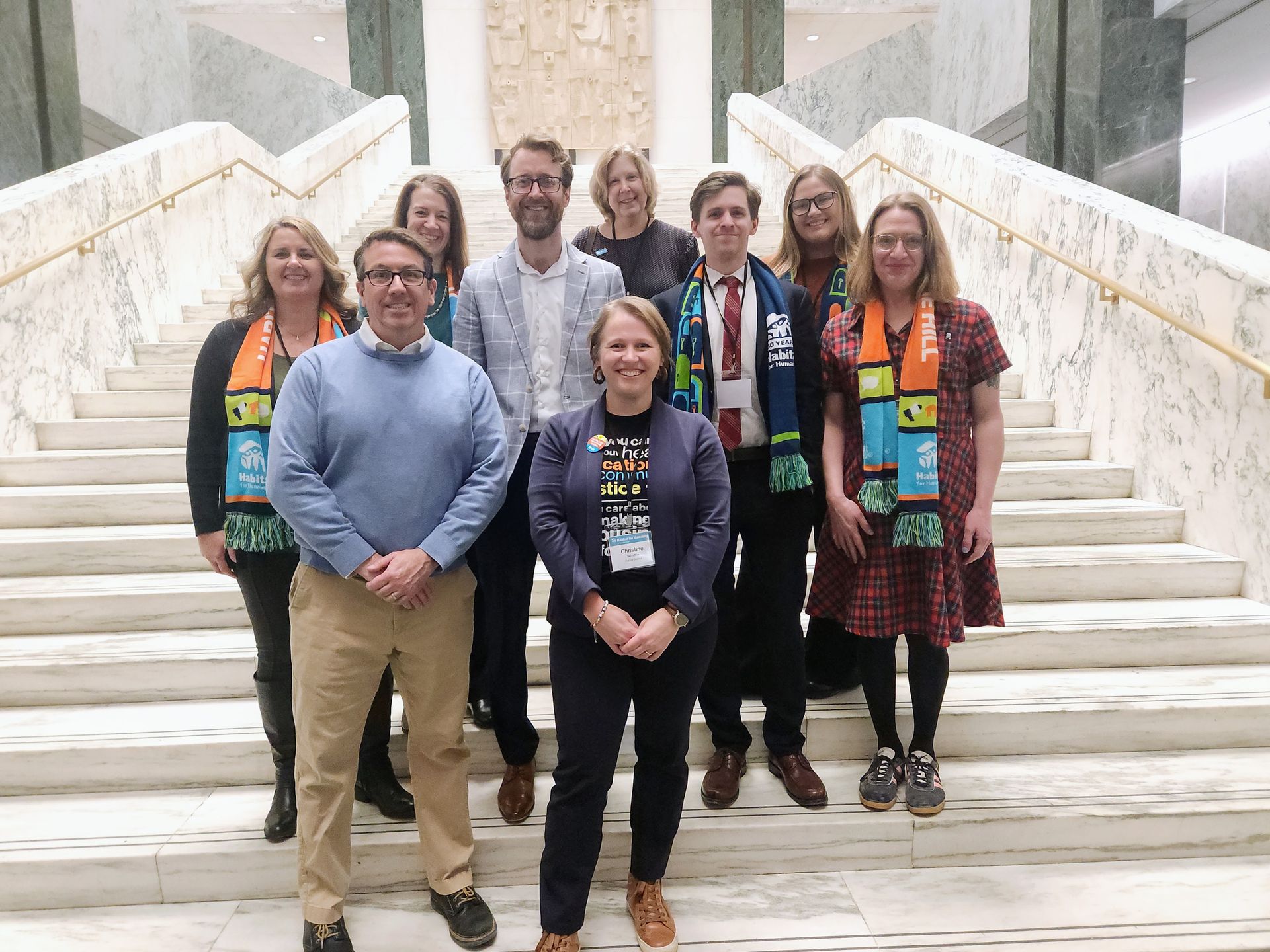
What is Advocacy?
Habitat for Humanity defines advocacy as changing policies and systems to eliminate barriers to adequate, affordable housing in order to create a world where everyone has a decent place to live.
In other words, while not visible like homes themselves, the laws, rules, and regulations that govern the construction, sale, and preservation of affordable housing directly influence Habitat’s ability to serve families in our community. Smart policies facilitate access to homeownership for low to moderate income families, and reduce the barriers that limit Habitat's ability to acquire land, build homes, and sell those homes at an affordable price. By prioritizing advocacy at the local, state, and federal levels, we can reshape policies to support our communities and help more families achieve sustainable homeownership.
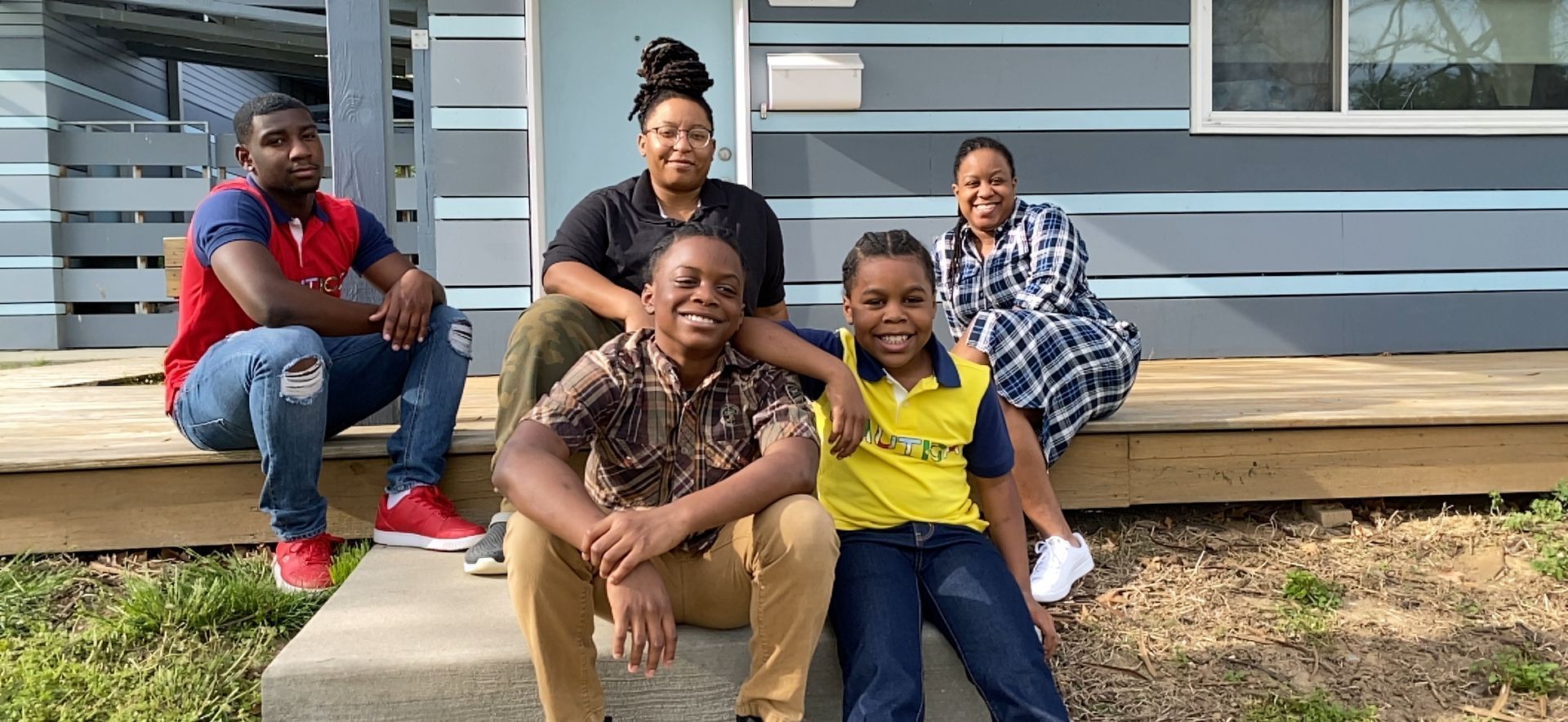
Why is Advocacy Important?
Families across the Greater Rochester region are struggling with unprecedented challenges as they pursue stable homeownership, including:
- Lack of Affordability - In GRHFH’s service area, nearly one third of households are cost burdened. Among households making less than $50,000 a year, over two-thirds are cost burdened (cost burdened is defined as spending over 30% of income on housing).
- Lack of Supply - There is a severe shortage of affordable housing options for first-time homebuyers, forcing families with limited incomes to remain in unstable rental situations and shutting them out of homeownership.
- Lack of Preservation - Current homeowners, especially those who are older and/or living on fixed incomes, cannot afford the repairs and modifications necessary to maintain healthy living conditions. Homeowners are often forced to make difficult financial tradeoffs to remain in their homes, or to relocate altogether.
Greater Rochester Habitat for Humanity is uniquely positioned to tackle these challenges head-on. By advocating for policies and initiatives that facilitate affordable homeownership, we can address the growing housing crisis, help break the cycle of poverty, and provide families with the stability they need to thrive.
Greater Rochester Habitat's Legislative Agenda
Expand federal support for affordable housing across the U.S.
Habitat U.S. has identified three public policy pillars that will guide our efforts to influence change at the national level in 2025:
• Increase affordable homeownership supply: Record high home prices are primarily driven by a record low supply of for-sale homes – particularly affordable, entry-level “starter” homes. Habitat will advocate for policies aimed at lowering the costs and barriers to affordable single-family home construction.
• Ensure equitable homeownership access: Access to decent, affordable homes remains limited in rural areas and communities of color, leaving millions of low-income households out of rising economic prosperity. Habitat will advocate for policies that equitably increase access to credit and favorable home financing.
• Improve homeownership resilience: Rising property taxes, insurance premiums, and critical home repair needs all present challenges to maintaining affordability. Habitat will advocate for policies that enable homeowners of all backgrounds to retain their homes and build wealth without the strain of additional cost burden.
Increase access to homeownership for first-time homebuyers
Bill A.787 / S.3150, also known as the HOME Act, would provide $10,000 toward down payment and closing cost assistance for first-time homebuyers.
Bill A.5098 / S.1157 would allow prospective first-time homebuyers to establish savings accounts specifically for the purpose of buying a home. Deposits into these accounts would be tax-deductible, up to $5,000 for individuals and $10,000 for married couples.
Support increased housing options for Seniors and Veterans
Bill S.6475 / A.3390 would establish a Senior Housing Task Force within the NYS Division of Homes and Community Renewal to conduct annual statewide assessments of senior housing needs. These assessments would inform innovative approaches and policy changes aimed at meeting the housing needs of the fast-growing Senior population.
Bill S.2375 / A.2338 would create the Veteran’s Home and Land Ownership Loan Program, a state-funded initiative intended to assist honorably discharged veterans and their families with home and land purchases. Specifically, the Program would provide loans of up to 20% of a home’s value or $40,000 for unimproved real property intended for new construction. This would create a vital tool for facilitating increased housing stability and homeownership for the over 40,000 Veterans in our service area.
Increase state investment in housing preservation and energy efficiency
Bill S.3315 would establish the Green Affordable Pre-Electrification (GAP) Fund, a NYSERDA-administered program that provides grants and loans to low- and moderate-income households for home repairs to correct deficiencies that currently prevent them from accessing current energy efficiency and electrification programs.
Advocate for local municipalities to opt into NYS Fair Taxation mechanism
In 2025, after two years of advocacy conducted by Habitat affiliates in NYS, Governor Hochul signed legislation (S.1718-B / A.355-C) that enables municipalities to provide property tax exemptions for homes sold by nonprofit housing organizations like Habitat to income-qualified families. Specifically, this bill:
- Allows local assessors to exempt 25-75% of a home’s assessed value from property taxation
- Promotes a more equitable system of property taxation by accounting for the restrictions placed on homes developed and sold using state subsidies
- Supports increased development in localities where high land values and property tax rates make homeownership unattainable for working families
In order for this exemption to take effect, counties, municipalities and school boards must pass a local law or resolution “opting-in” to this mechanism. GRHFH will work in 2026 to educate local officials on the benefits of this bill and encourage them to opt-in.
Download the PDF of our Legislative Agenda here.
How Can I Get Involved?
- Follow GRHFH on Instagram and Facebook at @RocHabitat.
- Share GRHFH's Legislative Agenda within your own network.
- Contact your local Representative's office and urge them to support affordable homeownership.
- Find your State Senator
- Find your Assemblymember
- Sign up below to stay updated on the latest advocacy news from GRHFH.